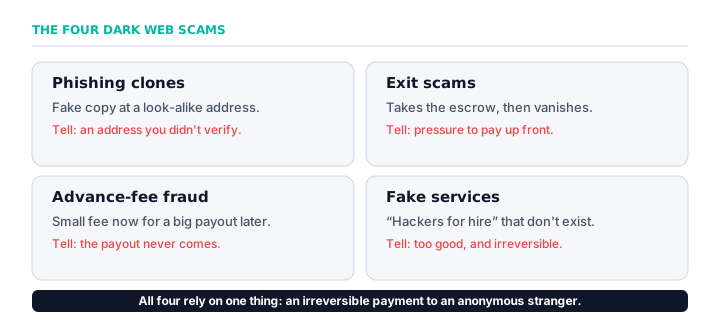
The dark web runs on four scams: phishing clones of real sites at look-alike addresses, exit scams where a market or vendor vanishes with the escrow, advance-fee fraud promising a payout that never comes, and fake services like ‘hackers for hire’ that simply take your money. Every one relies on an irreversible payment to an anonymous stranger — spot that pattern and you spot them all.
- Phishing clones sit at look-alike addresses
- Exit scams take escrow, then vanish
- Advance-fee fraud promises a payout that never comes
- Fake services (“hackers for hire”) simply don't exist
- All four rely on irreversible payment to a stranger
People worry about being hacked on the dark web. The far likelier fate is being scammed, because the dark web is close to a perfect environment for fraud: payments are irreversible, everyone is anonymous, and there's no authority to appeal to. Four scams dominate — learn the pattern and you can spot them all.
Phishing clones
The most common scam is a fake copy of a real site at a look-alike .onion address one character off the genuine one. Because addresses are long strings of nonsense, almost nobody reads all 56 characters — and the clone bets on that. The defence: never trust an address you didn't verify yourself.
Exit scams
The dark web's signature fraud, baked into how markets work. A market or vendor builds trust, accumulates escrow, then vanishes with it at the moment of maximum money held. The tell is any pressure to pay outside escrow or before you've received anything.
Advance-fee fraud
Pay a small fee now to unlock something much bigger later — a “processing fee” to release a transfer, a deposit for exclusive access. There is no larger payout; there's only the fee. If a transaction needs you to send money first for a disproportionate reward, it's this.
Fake services
Much of the dark web's lurid reputation is built on services that don't exist: “hackers for hire,” “hitmen,” miracle documents, cloned cards. The overwhelming majority are pure fraud. If a service sounds like something from a film, it's almost certainly a scam aimed at people who believe the film.
The one defence for all four
Every dark web scam rests on an irreversible payment to an anonymous party you can't hold accountable. Treat every request for upfront, irreversible payment as hostile until proven otherwise, and verify independently before trusting anything. Scams work by rushing you past that check.
Frequently asked questions
What are the most common dark web scams?
Four dominate: phishing clones of real sites, exit scams where a market or vendor vanishes with the escrow, advance-fee fraud promising a payout that never comes, and fake services like ‘hackers for hire’ that take your money and deliver nothing.
How do you avoid getting scammed on the dark web?
Treat every request for upfront, irreversible payment as hostile until proven otherwise, and verify independently before trusting an address, vendor or offer. Every dark web scam depends on an irreversible payment to an anonymous party.
Are hackers for hire on the dark web real?
Almost never. The overwhelming majority of ‘hacker for hire,’ ‘hitman,’ and similar services are pure fraud that take cryptocurrency and deliver nothing. If it sounds like something from a film, it's a scam.
What is an exit scam?
When a market or established vendor builds up trust and escrow, then disappears with the money at the point of maximum funds held. The tell is pressure to pay outside escrow or before delivery.
Why is the dark web full of scams?
Because it's a near-perfect environment for fraud: cryptocurrency payments are irreversible, everyone is anonymous, and there's no authority to appeal to for a refund. Those conditions remove every safety net that deters fraud elsewhere.